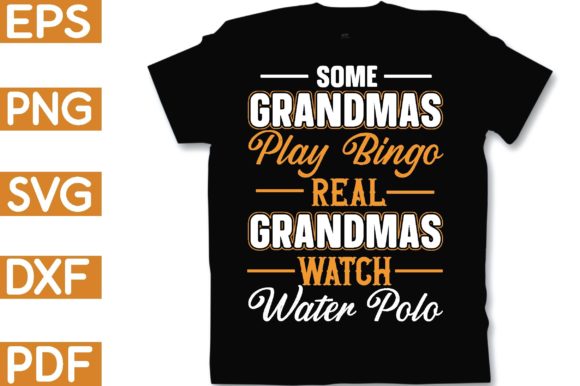
Some Grandmas Play Bingo, Real Grandmas Watch Water Polo
I've seen countless humorous designs come across my screen, but this one made me stop and smile. Some Grandmas Play Bingo, Real Grandmas Watch Water Polo is a straightforward, message-driven graphic that instantly tells a story. It isn't trying to be cute or overly decorative—it relies on a clever twist of words that anyone with a sports-loving grandma will recognize. The moment I opened the file, I could picture it stitched on a canvas tote, a comfy sweatshirt, or even a crisp kitchen towel waiting to be gifted.
The design is delivered as a collection of digital artwork files—SVG, PNG, EPS, PDF, and DXF—which immediately tells me this is a graphics asset, not a ready-to-stitch embroidery file. For any embroidery designer, that means the first essential step is digitizing the artwork yourself or having a professional convert it. That's not a drawback; it's an opportunity to tailor the stitch type, density, and thread colors to your exact project. The clean typography and balanced layout, however, give me a strong starting point.
The Humor and Personality Behind the Design
What makes this graphic work for embroidery is that the humor doesn't depend on tiny details or complex shading. The phrase itself is the star. The contrast between “play bingo” and “watch water polo” is funny, a little sassy, and deeply relatable. It creates an immediate mood that feels personal and specific to a certain type of grandma—the one who sits on the bleachers cheering, coffee in hand, while others might be at the bingo hall. That kind of personality translates beautifully into a handmade product because it makes the finished item feel like an inside joke or a proud statement.
Visually, the layout appears well-spaced and readable. Even at a glance, the text hierarchy is clear. When I evaluate a design for embroidery, I always squint at the file to see if the message still holds. With this one, the words remain legible and the rhythm of the lines doesn't fall apart. That's a good sign for digitizing because it means you can preserve the original feel without overcomplicating the stitch planning.
Translating the Graphic into Stitch: What Embroidery Makers Need to Know
Since this is a graphics bundle and not a machine embroidery design file, you'll need to approach it with a digitizer's eye. The SVG and EPS formats are your best friends here. They provide clean vector paths you can bring into embroidery software to map out a satin stitch for the lettering, a running stitch for outlines, or even a fill stitch if you want a bolder, patch-like look. I would avoid trying to auto-digitize a flattened PNG—the results are rarely clean enough for a professional finished product.
Lettering is the backbone of this design. That means every stitch decision matters. I'd lean toward a satin stitch for the main text, with a width of about 2.5 to 3.5 millimeters to maintain clarity without becoming too dense. If the original file contains very small secondary text, you might need to enlarge it slightly for embroidery or reconsider whether it's necessary. Overly dense stitching on small letters can make fabric pucker, and that's the last thing you want on a gift meant to be cherished.
Because the design is primarily text, you have a lot of creative freedom with thread colors. I would test a few palettes on scrap fabric: a classic navy on white, a bright aqua to hint at water polo pool vibes, or even a metallic gold for a slightly dressier look. The graphic itself is monochrome in its basic form, so you're not locked into any one color scheme—perfect for matching a shop's branding or a customer's favorite team colors.
Real Project Scenario: A Custom Tote Bag for a Water Polo Fan
Let me walk you through how I'd use this design in a real project. Imagine a customer orders a personalized tote bag for her mother, who spends every weekend at the pool watching her grandkids play water polo. The bag needs to be sturdy, washable, and instantly recognizable. After resizing the vector file to fit a 5x7 hoop, I'd stitch the design on a medium-weight cotton canvas tote in a soft cream color. A medium-weight cutaway stabilizer would keep the fabric from shifting, and topping the canvas with a water-soluble stabilizer would prevent the stitches from sinking into the texture.
For the embroidery itself, I'd use a satin stitch for the entire phrase, keeping the lettering crisp and slightly raised. The thread color would be a deep teal that echoes water polo pool water. The finished product would look polished, feel sentimental, and be completely functional. That tote bag would sell for a premium at a craft fair or in an Etsy shop because it feels personal and clever, not just generic.
Fabric and Placement Considerations for a Clean Finish
This design's readability makes it a good candidate for a variety of fabrics, but you still need to choose wisely. Smooth, tightly woven cotton, linen, or polyester blends work best for text-heavy embroidery. Stretchy fabrics like jersey or performance tees can be done, but they require a sturdy no-show mesh stabilizer and careful hooping to prevent distortion. I'd avoid highly textured fabrics like thick terry cloth unless you're planning to use the design as an appliqué patch first.
Placement matters just as much as fabric. On a sweatshirt, the design would sit perfectly across the chest or on the upper back. For a pillow cover, centering it on the face creates a conversation piece. On a cap, however, the curved surface and limited space might force you to split the text into multiple lines, and that could break the rhythm of the phrase. I'd steer clear of deeply curved surfaces unless you're willing to rework the layout.
When it comes to dark fabrics, the design's bold typography typically holds up well. But you still need to ensure your thread color contrasts enough. A light gray thread on a black sweatshirt, for example, might look elegant, but a dark navy thread on black would be nearly invisible. Always test a small stitch-out on the exact fabric and thread combination you plan to sell.
Commercial Potential and Small Shop Appeal
For Etsy sellers, craft business owners, or anyone building a small shop product line, this design offers a clear niche appeal. The water polo audience is passionate and underserved. Combine that with the "grandma" angle, and you have a product that fits perfectly into the personalized gift category. I can see this on baby onesies for a water polo coach grandma, on holiday ornaments, on aprons for family cookouts, or even on a simple embroidered patch that can be sewn onto a jacket or bag.
Because the graphic files are included in multiple formats, you can also use the design for printable mockups, sublimation transfers, or heat transfer vinyl. That versatility means you can offer the same cheeky message on a mug, a tote, or a framed print alongside your embroidered items. The design assets become a cross-product brand element, which is incredibly valuable for a small business trying to keep its look consistent.
Before you list anything for sale, though, confirm the commercial license. The product description doesn't spell out the terms, so you need to check whether the included files allow you to sell finished physical products. If the license is personal-use only, you'll need to reach out to the designer or purchase an extended license. Protecting your business means never assuming.
Stitching Details That Elevate the Finished Product
When I think about how this design will actually look after stitching, a few small touches can make a big difference. If you digitize the text with a slight underlay stitch, the satin edges will be cleaner and less likely to show gaps. Adding a subtle running stitch outline around the entire phrase can give it a slightly dimensional, patch-like feel without adding bulk. For a true appliqué look, you could even stitch the design onto a contrasting fabric square and then attach that as a patch to a garment.
Thread choices can also shift the mood. A matte polyester thread gives a modern, sporty feel that fits the water polo theme. A rayon thread will add shine, which might feel a little dressier—perfect for a grandma who wants to wear it to a family dinner. I'd avoid thick metallic threads unless you're very experienced; they can snap and fray, and the project can quickly become frustrating.
One thing I always do before committing to a final stitch-out is to view the design in black and white on my screen. It simulates the contrast a bit and helps me see if any part of the design gets lost. This design stayed strong in monochrome, which bodes well for how it will read on fabric, even from a distance.
Practical Designer Notes Before You Stitch
If you're about to use this design in a real embroidery project, here are the steps I recommend. First, open the SVG file in your digitizing software and check the node count and path cleanliness. Clean vectors make the digitizing process infinitely smoother. Next, set your hoop size appropriately—this design will fit comfortably in a 4x4 or 5x7 hoop, but always measure the actual dimensions after resizing. Test the design on a piece of fabric that matches your final product's weight and texture, using the same stabilizer and thread you'll use for the finished item. That small test can save you from wasting expensive blanks.
Pay close attention to small details. If the original file includes any decorative elements like tiny dots, waves, or water polo icons, those might need to be simplified for embroidery. A good rule of thumb is that any detail smaller than 1.5 millimeters will likely become muddy when stitched. You can either enlarge the element or remove it and rely on the text alone. The humor of the design doesn't need extra fuss to land.
Finally, think about the washability of the final product. If you're making a kitchen towel or a baby item, use polyester thread that won't bleed and a stabilizer that holds up to frequent washing. The design should look just as good after the tenth laundry cycle as it did the day you stitched it. That's what builds customer trust and keeps people coming back to your shop.
In the end, Some Grandmas Play Bingo, Real Grandmas Watch Water Polo is a smart, personality-packed graphic that gives crafters, embroidery designers, and small shop owners a lot to work with. It isn't a finished embroidery file, but that's exactly what puts the creative control in your hands. Whether you digitize it for a single tote bag or build a full product line around it, the design's humor and clarity will do the heavy lifting. Just remember to test, refine, and always respect the licensing. That's how a simple SVG turns into a handmade product that feels genuinely special.