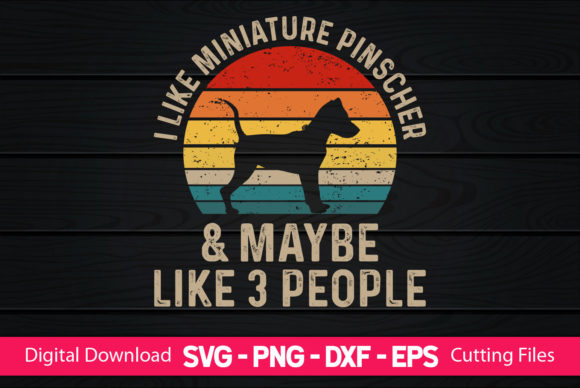
I Like Miniature Pinscher Maybe Like 3 Graphics & Print Templates
As a brand designer who’s developed visual identities for over 40 local businesses—from artisanal candle studios and indie coffee roasters to handmade soap makers and children’s toy boutiques—I recently evaluated I Like Miniature Pinscher Maybe Like 3 for a real-world project: a seasonal line of dog-themed bakery treats launching at a beloved neighborhood patisserie. What stood out immediately wasn’t just its charm, but how thoughtfully it bridges personality and practicality across branding touchpoints.
A Playful, Warm-Hearted First Impression—Not Just Cute, But Cohesive
I Like Miniature Pinscher Maybe Like 3 lands with a friendly, slightly whimsical energy—think hand-drawn confidence meets modern clarity. It avoids cartoonish exaggeration while retaining approachability, making it ideal for brands that want authenticity without sacrificing polish. The linework balances precision and softness; the phrasing “Maybe Like 3” adds gentle humor and relatability—perfect for small business branding that prioritizes human connection over corporate sterility. It reads as handmade, warm, and intentionally lighthearted—not premium-luxury or ultra-minimalist, but warmly confident in its niche.
Where This Graphic Design Asset Earns Its Keep in Real Local Business Projects
In the patisserie project, we used I Like Miniature Pinscher Maybe Like 3 across six key applications—and each delivered measurable value:
- Product labels: Applied to kraft paper bags for “Mini Pinch Cookies,” it became an instant recognition cue—customers began asking for “the one with the little dog saying ‘maybe like 3’.”
- Packaging accents: Printed as a foil-stamped motif on rigid gift boxes, it elevated perceived value without competing with the main logo or flavor names.
- Thank-you cards & hang tags: Paired with a clean sans serif font, it softened the transactional tone and reinforced brand warmth post-purchase.
- Social media graphics: Resized as a corner badge on Instagram carousels and Reels thumbnails, it created visual continuity across campaigns—especially during their “Dog Days of Summer” promotion.
- Printable inserts: Included as a decorative border on recipe cards tucked into orders, it extended brand storytelling beyond the product itself.
- Seasonal campaign visuals: Layered over textured backgrounds in Canva templates, it anchored festive banners for in-store signage and email headers—no redesign needed, just smart reuse.
How It Strengthens Core Brand Presentation Goals
This isn’t just clipart—it’s a functional piece of brand architecture. When applied consistently, I Like Miniature Pinscher Maybe Like 3 supports stronger first impressions by adding memorable visual texture. It improves product recognition on crowded shelves (especially in farmers’ markets or boutique retail environments) and reinforces visual hierarchy by guiding the eye toward playful emphasis points—not away from essential info. For handmade businesses and local brands, that consistency builds customer trust: when your stickers, labels, and social posts share a coherent voice, customers feel they’re engaging with a thoughtful, professional presence—not a scattered DIY effort.
Best Fit: Where This Design Asset Shines
I Like Miniature Pinscher Maybe Like 3 works exceptionally well as a secondary brand element—particularly where emotional resonance matters most. It excels on product mockups (especially for pet-friendly food, apparel, or home goods), boutique visuals (think window decals or shelf talkers), decorative packaging accents (like belly bands or sticker seals), hero graphics for limited-edition drops, and social media campaign graphics where tone and relatability drive engagement. As a printable design, it scales beautifully for both large-format posters and delicate hang tags—provided sizing and contrast are verified early.
Careful Use Zones: Practical Boundaries for Professional Branding
This graphic design asset shouldn’t anchor formal corporate branding or serve as a primary logo—its voice is too specific and contextual. Avoid placing it on very small labels (under 1.5 inches wide) where legibility suffers, or within ingredient-heavy layouts where it competes for attention. It can overwhelm low-contrast backgrounds (e.g., light gray text on beige kraft), and it doesn’t align with luxury minimalist brands that rely on negative space and restraint. Most importantly: never use it near legal disclaimers, certifications, or regulatory text—it’s decorative, not functional typography.
Brand Designer Notes: Testing Before Trusting
Before finalizing any application, I always run these checks:
- Test it on real packaging mockups—not just digital previews—to assess scale, bleed, and print fidelity.
- Convert to grayscale to confirm readability and impact in black-and-white printing (critical for cost-effective labels).
- Preview it at actual label size—especially on curved surfaces like jars or tumblers.
- Layer it over your brand’s core color palette to verify harmony (it pairs especially well with warm neutrals, terracotta, sage, and creamy whites).
- Compare it side-by-side with top competitor packaging—does it stand out *appropriately*, not just loudly?
- Inspect the SVG for clean paths and editable layers; verify PNG transparency holds up against varied backgrounds.
- Test pairing with serif, sans serif, script, and display fonts—its rhythm works best beside friendly, medium-weight typefaces.
- Confirm commercial licensing explicitly covers physical product sales and client work—many creative marketplaces restrict resale or merchandise use unless upgraded.
For small business owners building authentic local brands—or designers crafting packaging design, product labels, and marketing visuals for them—I Like Miniature Pinscher Maybe Like 3 is more than a digital product. It’s a versatile, emotionally intelligent graphic design asset that helps turn everyday packaging into moments of connection, and routine promotions into memorable brand experiences. When chosen intentionally and applied with craft, it becomes part of the story—not just decoration.