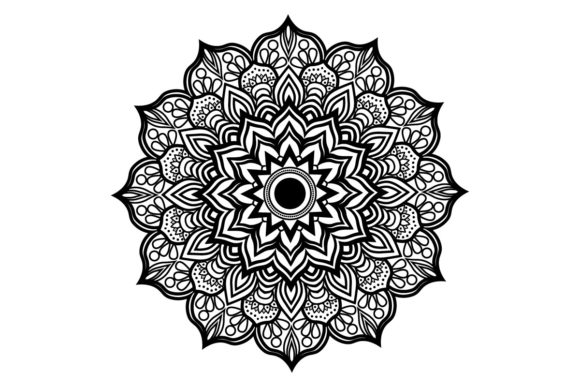
Ornament Mandala: Graphics & Crafts for Local Branding
As a brand designer who’s helped over 70 local businesses refine their visual identity—from artisanal soap makers in Portland to family-run bakeries in Nashville—I recently evaluated Ornament Mandala for a real-world project: rebranding a seasonal candle studio specializing in hand-poured soy blends with botanical names like “Lavender Moon” and “Cedar Hearth.” My goal wasn’t just decoration—it was strategic visual reinforcement of craft, calm, and intentionality. Here’s how Ornament Mandala performed beyond the download screen.
A First Impression That Speaks Before You Do
Opening the file, I felt immediate resonance—not because it’s flashy, but because it breathes. The symmetry, layered geometry, and subtle organic flourishes suggest quiet confidence, mindful craftsmanship, and gentle elegance. It doesn’t scream “festive” or “boho”—it leans into refined ritual. For a local business, that translates powerfully: a skincare boutique gains perceived authenticity; a children’s toy shop conveys thoughtful design; a florist’s thank-you card feels like a small keepsake. It reads as handmade without looking amateurish, decorative without sacrificing clarity—ideal for brands that prioritize soul over saturation.
Where Ornament Mandala Earns Its Place on Real Shelves and Screens
This graphic design asset shines where local businesses need quiet authority and emotional texture:
- Product labels and packaging accents — scaled down as a border on kraft paper soap wraps or enlarged as a foil-stamped centerpiece on candle boxes, it adds dimension without clutter.
- Hero graphics for seasonal campaigns — used as a subtle watermark behind “Holiday Collection” banners on Instagram or website headers, it creates cohesion across social media graphics and email headers.
- Printable inserts and thank-you cards — its vector precision ensures crisp lines at any size, making it perfect for letterpress-style thank-you notes tucked inside orders.
- Boutique visuals and in-store signage — when paired with a warm serif font, it elevates price lists, menu boards, or shelf talkers for home decor shops or gift boutiques.
- Product mockups and digital presentations — layered cleanly over matte ceramic mugs or linen pouches in mockup templates, it reinforces brand polish before a single unit ships.
In each case, Ornament Mandala supports stronger first impressions, clearer visual hierarchy, and more consistent brand identity—critical for small business branding where every touchpoint competes for attention in crowded local markets.
Where Caution Meets Craft
Not every application serves the asset—or your brand—equally well. I advised my candle client to avoid using Ornament Mandala in these contexts:
- Formal corporate branding — its decorative nature dilutes authority for law firms, financial advisors, or B2B service providers.
- Ingredient-heavy food labels — when regulatory text dominates, intricate ornamentation competes rather than complements.
- Very small labels (under 1.5” width) — fine linework risks blurring or disappearing on jar seals or tea bag tags unless simplified first.
- Luxury minimalist packaging — if your brand voice is “quiet luxury,” this design may feel too present unless reduced to a single radial motif or monochrome line variant.
- Low-contrast backgrounds — tested on light gray or oatmeal-toned substrates, some inner layers faded; always preview in actual brand color palettes.
Practical Designer Notes from the Studio Floor
Before committing Ornament Mandala to final files, I ran these checks—non-negotiable for professional branding:
- Tested on real packaging mockups — printed at 300 DPI on uncoated stock to verify line integrity and ink bleed.
- Checked black-and-white usage — confirmed legibility in grayscale for invoices, receipts, and B&W social posts.
- Previewed at label scale — zoomed to 400% to assess how inner loops hold up on 1” x 1” hang tags.
- Paired with all brand fonts — it harmonized beautifully with serif (Playfair Display), sans serif (Montserrat), and script (Dancing Script), but clashed with bold display fonts like Bebas Neue.
- Verified SVG editability — confirmed clean paths, no raster embeds, and grouped layers—essential for adjusting stroke weight or isolating elements.
- Reviewed PNG transparency — ensured crisp alpha channels for social media graphics placed over textured backgrounds.
- Confirmed commercial license — verified explicit permission for physical product use, resale, and client work—no “personal use only” surprises.
For handmade businesses and creative entrepreneurs, this kind of due diligence separates polished marketing visuals from generic clipart. Ornament Mandala isn’t just another illustration—it’s a versatile, mood-driven design asset that, when applied intentionally, deepens customer trust and elevates perceived value.
Final Thought: Design as Local Differentiation
In an era where consumers choose local for meaning—not just proximity—Ornament Mandala offers what algorithms can’t replicate: human-centered visual rhythm. It works because it doesn’t shout. It invites pause. Whether anchoring a new line of herbal teas, framing a boutique’s holiday window display, or softening the edges of a children’s product label, it quietly signals care, continuity, and craft. For small business branding, that’s not decoration—it’s differentiation.