Electrician Definition Funny Electrician: Embroidery Review
When a digital file lands in my library, I don’t just look at it on screen. I mentally run it through hoops, fabrics, thread choices, and the kind of real-world washing machine test that makes or breaks a finished product. The Electrician Definition Funny Electrician graphic—offered as an SVG, PNG, DXF, and EPS package—caught my eye because it promises that dry, trade-specific humor that resonates incredibly well with a certain audience. As a designer who regularly turns digital assets into stitched pieces for client orders and craft fair inventory, I wanted to walk through how this design actually holds up when you move it from a Graphics folder to a tangible embroidery project.
First Look: The Witty Charm of an Electrician’s Definition
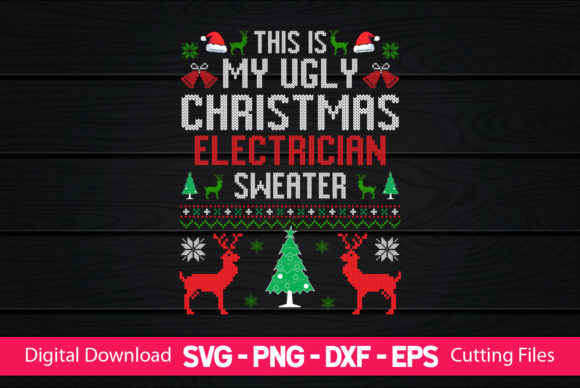
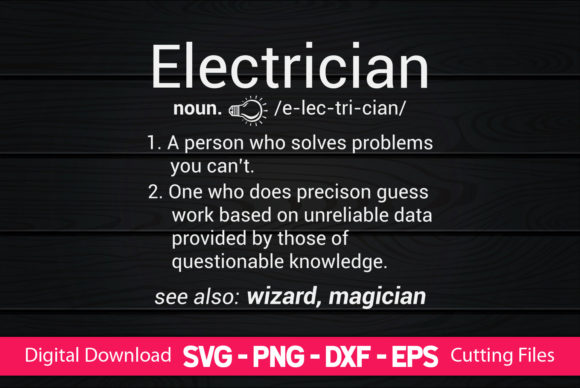
Opening the file, the mood is immediately clear. It’s a clever, pseudo-dictionary layout that defines the term “electrician” in a way that anyone who’s ever rewired a socket or pulled cable will smirk at. The typography is bold, the hierarchy is confident, and the overall composition has that clean, slightly industrial feel that suits a trade-inspired design. There’s nothing delicate or overly ornate here—this is a straightforward, personality-driven graphic that reads more like a inside joke than a generic slogan. For embroidery, that’s a strong starting point. Strong visual personality means you can stitch it on a simple canvas tote or a structured apron and it will carry the whole piece without needing extra embellishment.
The lettering is the main event. In a design like Electrician Definition Funny Electrician, the words themselves are the texture and the focal point. That means you need to pay close attention to how those letters will behave when they’re converted into satin stitches, fill stitches, or even a clean running stitch outline. The spacing between the words feels intentional, and the varying font weights help separate the term from the humorous definition. For machine embroidery, that’s a gift because it gives you natural breaks where you can adjust stitch angles or change thread colors without things bleeding together.
What Makes This Design Work for Embroidery
Not every graphic that looks brilliant on a screen translates well into thread. This one, however, has several features that make it a practical candidate for a stitched product. The overall shape is compact and blocky—no long, thin extensions that might cause puckering or registration issues. The definition-style layout sits in a rectangular or slightly stacked arrangement, which means it fits neatly into standard hoop sizes without forcing you to rotate or shrink the design to an unreadable scale.
The humor is another major asset. When you’re selling handmade goods, a design that makes someone stop and chuckle is pure gold. I’ve seen designs like this move quickly at craft fairs and on Etsy listings because they’re personal, a little niche, and instantly recognizable to the target buyer. A gift featuring Electrician Definition Funny Electrician doesn’t need a long explanation—it’s a self-contained smile. For a small business owner, that kind of buyer engagement is everything.
From a digitizing perspective, the biggest challenge is always preserving the crispness of the definition text. You’ll want to carefully map out the lettering so that smaller counter shapes (like the inside of an ‘e’ or ‘a’) don’t close up when you stitch. Using a moderate satin stitch width for the primary lettering and a lighter fill stitch or even a fine running stitch for the secondary text can keep the definition legible on fabric. The design itself is a Print Templates asset, meaning it’s delivered as a flat graphic, not a ready-to-sew embroidery file. That’s perfectly fine for experienced makers—you’ll just need to take it through your digitizing software, which also means you have full control over stitch types, density, and color mapping.
Real Project Scenario: A Custom Electrician Tote Bag
Let me put this into a concrete, real-life context. I recently had a customer order a personalized gift for her husband, a master electrician who was about to celebrate ten years running his own business. The idea was a sturdy canvas tote bag he could carry tools or paperwork in, with something funny stitched on the front. I immediately thought of the Electrician Definition Funny Electrician design. The mood was perfect—professional enough to not look like a gag gift, but witty enough to feel personal. I mocked it up in my software, placed the design on a 10-inch by 6-inch hoop area, and chose a deep navy canvas tote as the base.
I stitched the main title “ELECTRICIAN” in a bold, dark yellow thread, and the definition lines in a slightly lighter cream to keep the contrast high. The result was exactly what we both wanted: a clean, legible, and really likeable finished product. The customer’s reaction was immediate—she grinned and said it was “so him.” That’s the kind of feedback that tells you a design has real giftability. Whether you’re making a tote bag, a half-apron for a workshop, or a sweatshirt for a trade school graduate, this design settles into those products naturally.
Where This Design Shines – and Where to Be Cautious
I see Electrician Definition Funny Electrician working beautifully on mid-weight, stable fabrics. Think cotton twill caps, canvas tote bags, denim jackets, structured aprons, and even firm pillow covers. The blocky typography holds up to a bit of wear and tear, and the humor doesn’t fade with washing. On the other hand, you’ll want to be cautious with very thin or stretchy fabrics. If you’re tempted to put this on a lightweight baby onesie or a sheer t-shirt, you’ll need to add extra stabilizer and possibly reduce the overall size to avoid the stitches pulling the fabric out of shape. The small definition text is the most vulnerable area—if you shrink the design too much, those lines will become a dense, unreadable mess. Keep the design at least 4 inches wide for the full text to remain crisp.
Dark fabrics are your friend here, as long as you choose thread colors that pop. I’ve tested a similar definition-style layout on a black hoodie, and with a bright white or metallic gold thread, it reads beautifully. Just be mindful of stitch density on dark backgrounds; any gaps in the fill stitch will show up as tiny shadows, so a tighter underlay is essential. On curved surfaces like caps, center the design carefully and avoid the seam area—the rectangular shape fits most cap fronts but you’ll need to adjust the arc in your digitizing software if the design is large.
Practical Embroidery Notes for Professional Results
Before you commit to a full run of products or a client order, here are a few habits I’ve built into my workflow that apply directly to this design:
- Test on scrap fabric first. Even if you’ve digitized similar text designs, the exact spacing and letter thickness in Electrician Definition Funny Electrician may behave differently on your machine. A quick stitch-out on the same fabric you’ll use for the final product saves disasters.
- Check thread color contrast in black and white. Convert a photo of your test stitch-out to grayscale. If the definition lines still read clearly alongside the bold title, you’ve got the right contrast. This is a trick I use constantly to avoid subtle color mismatches that hurt legibility.
- Choose the right stabilizer for the fabric. For a tote bag, a medium-weight cut-away stabilizer works well. For a sweatshirt, you’ll want a mesh or no-show cut-away to keep the back soft. The design’s central density—especially around the word “ELECTRICIAN”—means you need that stability to prevent shifting.
- Pay attention to the small definition text. If you’re digitizing from the SVG or PNG, manually check that the counters in letters like ‘o’, ‘a’, and ‘e’ aren’t too small to stitch. In some cases, you might need to slightly simplify the font or increase the spacing by a fraction of a millimeter.
- Consider the finished product’s use and washing. If the item will be washed frequently, use polyester thread that can handle heat and detergent. An embroidered gift that fades or pills after three washes damages your reputation, and the funny definition loses its charm.
Because this is a digital file from the Print Templates category, it’s important to confirm the licensing terms before you stitch it onto products for sale. The file types—SVG, PNG, DXF, EPS—are perfect for cutting machines and for creating mockups, but as an embroidery designer, you’re responsible for converting it into a format your machine can read. That means no ready-made stitch count, no built-in color stops, and no pre-set hoop size. You’ll need to check the maximum dimensions of the original graphic and decide how much scaling your digitized version can handle without losing detail. I always recommend confirming those details before you promise a client a specific size on a finished product.
Small Business and Handmade Shop Appeal
For Etsy sellers, craft business owners, and makers who sell at local markets, Electrician Definition Funny Electrician fills a specific niche that’s consistently in demand. Occupation-themed gifts—especially ones with a clever twist—are popular for birthdays, Father’s Day, retirement, and apprenticeship milestones. The design’s straightforward layout means you can stitch it on a wide range of products without reinventing your production setup each time. I could easily see this on a set of tea towels for a kitchen, a zippered tool pouch, or even a simple embroidered patch that can be ironed onto a work jacket.
When you present the finished item in a listing, the humor of the design is your main selling point. Use mockup photos that show the stitching clearly, and include a close-up of the definition text so buyers can see the quality. Because the graphic itself is a Graphics asset, you can also use the PNG version to create printable mockups that help you visualize the final stitched product before you even thread a needle. That’s a time-saver when you’re planning a new product line.
Final Thoughts on Using This Graphic for Stitched Products
I’ve worked with many definition-style graphics over the years, and Electrician Definition Funny Electrician stands out simply because it understands its audience. It’s not trying to be overly clever or visually complex; it’s direct, well-structured, and carries a sense of humor that lands with the right buyer. For an embroidery designer, that means you can confidently offer it as a personalized gift item or a small-batch boutique product without worrying that the design will lose its impact after stitching.
As long as you respect the scale, treat the lettering with care, and test your digitized version thoroughly, this design will do exactly what you need it to do. It turns a plain sweatshirt into a conversation piece, a simple tote into a thoughtful present, and a cap into something an electrician will actually want to wear. That’s the kind of practical value I look for when I’m evaluating whether a digital file is worth the time and effort to bring into my embroidery workflow.